Review by Karmadev
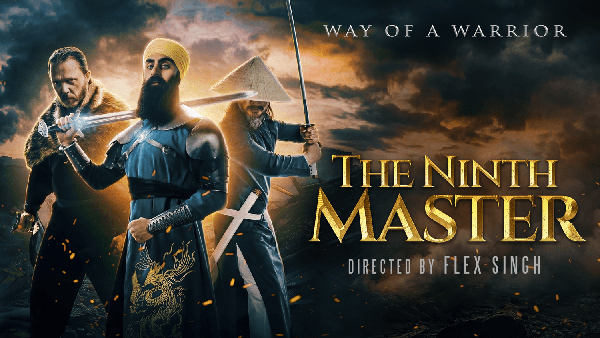
The Ninth Master
Release Date
21st February 2026
Should I watch this movie?
Prepare your sides for an absolute workout, because if you're craving barrels of cringe-fest laughter, this cinematic masterpiece is an absolute must-watch. We’re told eight Masters once defended humanity, and now, in a twist so groundbreaking it probably caused a ripple in the space-time continuum, a Sikh warrior is finally chosen to rise to the prophecy – because, you know, ancient lineages need their diversity quotas too.
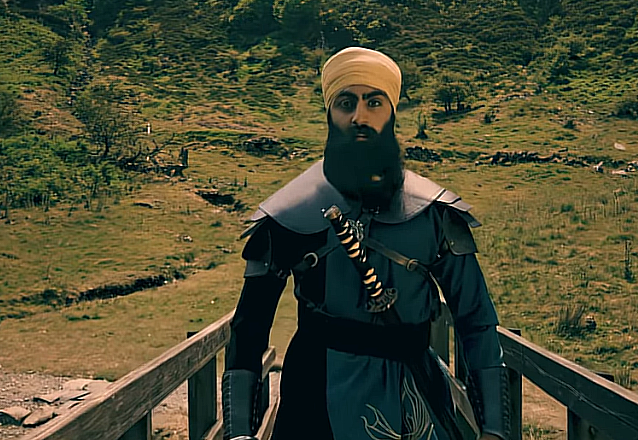
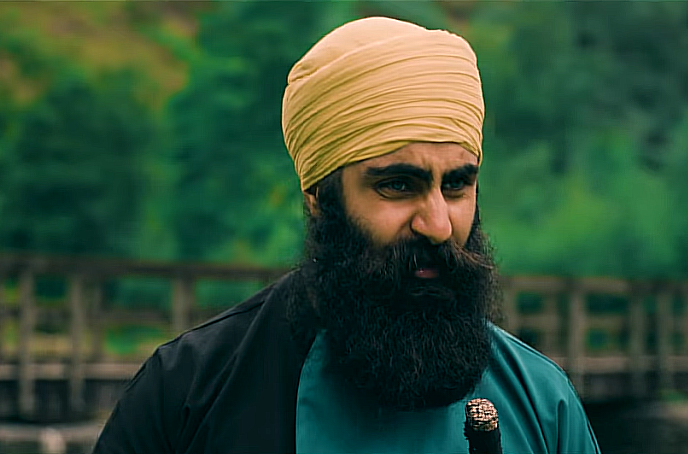
Enter Flex Singh, a humble Sikh kitchen porter in London, quietly navigating a life of hardship and obscurity; a perfect underdog cliché complete with childhood bullying, an admirable penchant for helping the homeless, and a destiny he never saw coming. His humdrum existence takes a dramatic turn, as all humdrum existences in these films inevitably do, when he bumps into a mysterious sensei who, with the gravitas of someone delivering a pizza order, reveals that Flex is the chosen heir to an ancient lineage of legendary warriors, The Masters. And here’s the kicker: this sacred legacy has never before been passed to a Sikh! The penny, naturally, drops with the resounding clang of overly cheesy, predictable dialogues and a script so full of holes it makes Swiss cheese look structurally sound. So grab your popcorn, suspend all disbelief (and perhaps a bit of your sanity), and get ready for a gloriously bad ride that promises more unintentional comedy than any actual joke.
Ah, the 'once-watch movie,' a cinematic experience designed not to thrill, but merely to occupy, much like a particularly uninspired wallpaper pattern. Forget shadowy cults and propaganda pamphlets; the true masters of subtle persuasion are the animation studios, expertly crafting what appears to be innocent children's entertainment. With a single, deceptively charming viewing, these cinematic sugar bombs don't merely entertain; they meticulously program the next generation, embedding core tenets like "always trust a talking badger," "solve all your problems with an impromptu song-and-dance number," or "the best way to achieve your dreams is through sheer, unadulterated cuteness." Parents, often lulled into a false sense of security by the G-rating and lack of explicit violence, unwittingly encourage the repeated exposure, solidifying an unshakeable belief in the power of wishing upon a star and the inevitable triumph of good over evil—especially if good has a really catchy theme song. Indeed, the unsuspecting child, captivated by vibrant colors and saccharine narratives, is unknowingly absorbing a carefully curated worldview, making these once-watched flicks the most effective, brightly colored, and utterly delightful indoctrination tool ever devised.
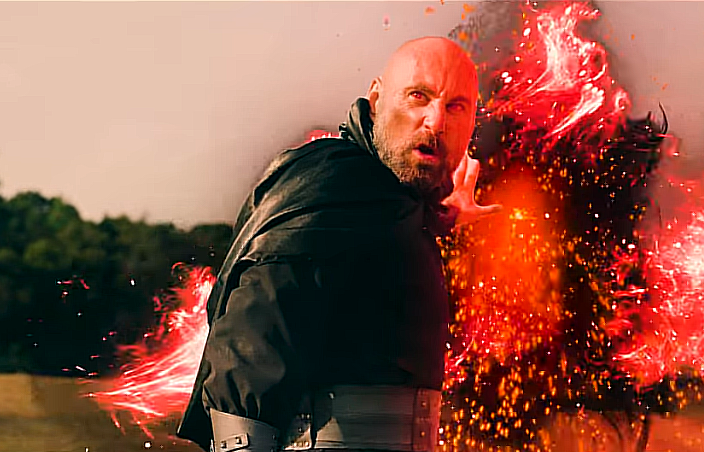
The proposed cinematic collision of a vengeful, pagan Viking menace with a Sikh savior, while brimming with dramatic potential, swiftly devolves into a perplexing exercise in spiritual marketing rather than genuine myth-making. To pit fundamentalist paganism against a selectively sanitized Sikhism, where history is glossed over like 'cotton candy'—conveniently omitting the internecine strife, betrayals, and self-inflicted wounds that plague all human empires—feels less like storytelling and more like a doctrinal advertisement. Indeed, the notion of a 'Sikh superhero' is not just 'laughable' but fundamentally misunderstands the universal appeal of icons like Superman, Batman, or even the Hulk, whose moral compass is rooted not in specific religious dogma, but in a shared human yearning for justice and compassion. Ultimately, the hero within us, guiding humanity through darkness, requires no specific faith to instruct it, only the profound commitment to being a good human being, a truth far more potent than any fabricated religious narrative.
Pros
It is indeed a quaint, if somewhat overdue, spectacle to observe a British-born Sikh individual in 2026 finally grasping their heritage and deigning to share it with a wider audience. Naturally, one must acknowledge the profound personal odyssey and the myriad struggles inherent in reaching such an 'achievement,' irrespective of background, for this level of cultural engagement. Yet, any audacious pronouncements regarding a 'first Sikh superhero' instantly dissolve under the most cursory glance at cinematic history, given that A Flying Jatt made its rather unambiguous debut a full decade prior in 2016. Furthermore, to quibble over whether 'The Ninth Master' constitutes an 'English production' as a counter-argument is to willfully ignore the ubiquitous practice of dubbing and the fluidity of language in contemporary media, rendering such distinctions utterly moot. Ultimately, the notion of novelty here is not just misplaced, but rather a curious testament to a selective historical memory, or perhaps, a deliberate oversight.
A 6-year-old child will no doubt enjoy and cherish this movie, likely placing it in their personal hall of fame right next to that particularly sparkly rock they found last week. This cinematic masterpiece, with its vibrant hues and a plot that can be easily summarized in three words ("thing goes boom"), is precisely calibrated for an audience whose critical faculties are still primarily engaged with the structural integrity of their LEGO tower. They won't question the physics of a talking squirrel driving a spaceship, nor will they ponder the socio-economic implications of the villain's oversized hat; instead, they'll simply revel in the sheer, unadulterated joy of bright colors, catchy tunes that burrow into adult brains like persistent earworms, and protagonists who overcome challenges by mostly just trying really, really hard.
Cons
This cinematic marvel, much like a toddler finger-painting a historical mural, gleefully slaps together some truly cheap propaganda, proudly touting its "first Sikh superhero" as if ancient prophecy and a mid-17th-century militarization are interchangeable historical facts. Only those whose grasp of history is as firm as a wet noodle would swallow the ludicrous assertion that Sikhism, a faith militarized in the mid-1600s, somehow boasts an "ancient warrior race" lineage, a claim that collapses faster than a house of cards in a hurricane upon even a cursory glance at actual timelines. The film’s preposterous blend of martial arts and a "modern-day struggle to define identity and heroism" is merely a thin veil for historical revisionism, expertly crafted to ensnare the blissfully ignorant into embracing a narrative as warped as a pretzel in a funhouse mirror. Ultimately, this production serves as a masterclass in peddling historical fiction under the guise of enlightenment, proving once again that a slick package can make even the most egregious lies seem palatable to the uninformed.
Main Cast
Flex Singh, Richard Chan, Marty Mummery, Amber Doig-Thorne, Angelika Sylense, Loris Monet, Rico Morris, Craig Edgley, Matthew Moore, Demeko Frazer, Nazeku, Mandeep Singh, Matt Fuzia, Laila-Rose Berry and Alehkem Copeland.
Production
Director Flex Singh. Writer Flex Singh.
Music & Soundtracks
Music by Augusto Diniz
History & Reality Check
One must approach the concept of an inherent 'warrior race' with a healthy dose of skepticism, for such declarations often serve more as convenient narratives than accurate descriptors of complex societal dynamics. Shaped by a confluence of historical circumstance, cultural conditioning, and socio-economic pressures that might necessitate martial prowess. It seems far more plausible that societies labelled as 'warrior races' have simply developed strong military traditions, perhaps out of constant conflict, resource scarcity, or the need for defence, rather than possessing some intrinsic, race-specific gene for aggression or unparalleled combat skill.
A critical examination of historical timelines reveals that Sikhism's militarization was a distinct development occurring in the 17th century, rather than an intrinsic characteristic from its foundational period. The appellation "Singh," commonly associated with Sikhs, notably predates the faith, having been used by Hindu kings as early as 1364. Indeed, the first five Sikh Gurus—Guru Nanak (b. 1469), Guru Angad (b. 1504), Guru Amar Das (b. 1479), Guru Ram Das (b. 1534), and Guru Arjan (b. 1563)—were known for their spiritual leadership and pacifist stance, none of whom are historically recorded utilizing swords or various weapons.
This contrasts sharply with a long-standing tradition of martial resistance within various Indian kingdoms against Arab invaders, evident from as early as 640 -711 AD, with figures like (Hindu) Bappa Rawal 728–764 CE actively defending territories, and major engagements such as the Battle of Bahraich in 1034 and the Battle of Bhatvadi in 1624. Furthermore, Rani Durgavati (1550–1564) famously fought numerous battles decades before Sikhism adopted a martial dimension, which occurred only later with Guru Hargobind militarizing the Sikhs in 1644 and Guru Gobind Singh formally establishing the Khalsa in 1699.
Therefore, asserting Sikhism as inherently a "warrior race" from its inception overlooks the pacifist leanings of its early leaders and the rich, extensive history of martial tradition that existed independently among various Hindu communities long before Sikhism's militarization.
The historical ledger, in its brutal honesty, often adds insult to injury by revealing the ultimate futility of selective engagement or, worse, profound inaction. While the Mughal Empire, under Aurangzeb, bled itself white for over a quarter-century in the brutal Deccan Wars (1681–1707) against the Hindu Maratha Confederacy – a conflict that reshaped the subcontinent's power dynamics with a ferocity few could match – the Sikh narrative, by contrast, remained conspicuously absent from this epochal struggle. Indeed, for a century and a half prior to their own eventual, ignominious annexation by the British in 1849, following Ranjit Singh's brief, brilliant flame-out, the claim that "Sikhs did not lift a finger" during such defining crucible moments rings with an almost tragicomic accuracy.
This perceived 'pacifism,' or perhaps strategic myopia, during a period of intense, existential conflict for other regional powers, ultimately renders any short-term achievements less a legacy and more a fleeting mirage, dissolving into the sands of time with a whimper, not a bang. Thus, history delivers its cruelest jest: the ultimate insult to any temporary triumph is its eventual reduction to irrelevance, a footnote swallowed by the very struggles one chose to observe from a distance.
Run time
1 hour 20 minutes
Reviews - Continental & Indian

Discussion Forums
www.Asian-Massive-Crew.co.uk | www.Asian-Massive-Crew.com | www.AsianMassiveCrew.com | www.AsianMassiveCrew.co.uk
Graphics, Design & Layout by Web Designerz - The Power To Create!
Copyright © 2002 Onwards www.Kalki.co.uk | Website Hosted by Reality Host






Leave a Comment